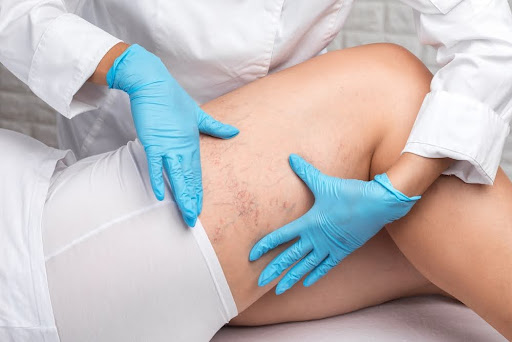
Sometimes, leg pain and swelling are caused by fatigue or overexertion. However, at other times, it may be a sign of an underlying vein disease. The same applies to visual changes you see in the veins on your legs. They could be purely cosmetic or an outward sign of an internal vein issue.
Vein conditions are widespread, but that doesn’t mean they’re always harmless or that you should ignore them. This comprehensive vein guide will walk you through the most common vein conditions, their causes, and symptoms.
Our vascular experts in Nashville, TN, will also tell you the best vein treatments available, and most importantly, help you understand when it’s time to consult a vascular specialist for an accurate diagnosis and effective care.
Understanding How Your Veins Work
What Are Veins?
Veins are a vital part of the circulatory system and the body’s main blood reservoir, holding 60 to 70 percent of your total blood volume at any given time. Their primary role is to collect blood from tissues throughout the body and return it to the heart, where it can be sent to the lungs for oxygenation.
This is essential for survival. Without veins returning blood to the heart, circulation would stop, oxygen would not reach your organs, and life would be impossible. Your veins also help regulate blood pressure and body temperature, facilitate the removal of waste products, and indirectly support immune and lymphatic function.
What Do Veins Do?
Veins have two primary roles, depending on their location within the venous system. They either carry oxygen-rich blood from your lungs to your heart, which only occurs in the pulmonary veins, or they collect oxygen-poor blood throughout your body and bring it back to your heart.
These crucial roles can be challenging at times, especially in the legs, where they must work against gravity. To accomplish this uphill task, they are equipped with numerous valves that open to let blood flow toward the heart and close to prevent it from flowing backward.
When these valves function properly, blood flows efficiently toward the heart. When they become weak or damaged, they can’t close fully, which allows blood to leak backward (venous reflux) and pool in the lower legs.
This pooling creates chronic venous hypertension, the driving force behind most chronic vein problems, including chronic venous insufficiency, varicose veins, leg swelling, skin changes, and venous ulcers.
Over time, significant venous disease can increase the risk of developing a clot in a deep vein, a serious condition known as Deep Vein Thrombosis (DVT), which requires prompt medical evaluation.
DVT is a well-recognized cause of chronic venous insufficiency, since the clot and resulting scar tissue can permanently damage the vein valves. People with chronic venous disease or venous insufficiency may also be at higher risk of DVT, as abnormal blood flow and damaged veins can promote clot formation.
Common Vein Conditions Explained: Symptoms and Causes
Weak veins or poor vein function can lead to a range of vein conditions. Most are not life-threatening, although they can cause discomfort, cosmetic concerns, and long-term complications if left untreated.
Here are the most common issues vascular specialists diagnose and treat:
1: Varicose Veins
Varicose veins are large, swollen, and twisted veins that appear blue or dark purple. They usually develop in the legs and often look like bulging, rope-like cords.
What Are the Symptoms of Varicose Veins?
The most common sign of varicose veins is the visible bulging vein under the skin’s surface. Sometimes, that is the only symptom people have. Other symptoms can include:
- An achy or heavy feeling in the legs
- Throbbing, burning, or muscle cramping
- Swelling in the lower legs
- Pain that worsens after sitting or standing for a long time
- Itching around one or more of the veins
What Causes Varicose Veins?
The primary cause of varicose veins is weakened or damaged valves (venous insufficiency). Risk factors include genetics, age, being overweight, pregnancy, and a job that requires long periods of sitting or standing.
2: Spider Veins
Spider veins are different from varicose veins. They do not bulge like varicose veins. They are smaller, damaged veins that appear as a web of red, blue, or purple lines visible just under the skin’s surface. Common places for spider veins are the legs and face.
What Are the Symptoms of Spider Veins?
For most people, spider veins are a cosmetic issue. However, in some cases, they can cause symptoms like itching, burning, or aching, especially after prolonged standing.
What Causes Spider Veins?
Spider veins can be caused by hormonal changes, sun exposure, injuries, and genetics. They can also be a sign of blood backup from deeper, unseen varicose veins.
3: Chronic Venous Insufficiency (CVI)
Chronic venous insufficiency (CVI) is a more advanced form of vein disease that can develop from long-term venous hypertension. It can contribute to varicose veins and, over time, lead to more serious complications like ulcers, but not all varicose veins progress to CVI.
What are the Symptoms of CVI?
CVI symptoms can range from mild to severe and include:
- Persistent swelling in the legs and ankles
- A feeling of tightness or heaviness in the calves
- Pain that gets better when you elevate your legs
- Leathery-looking skin on the legs
- Flaking or itching skin
- Changes in skin color, often a reddish-brown discoloration around the ankles (stasis dermatitis)
What causes CVI?
CVI is most often caused by long-term, untreated high blood pressure in the leg veins (venous hypertension) or a history of deep vein thrombosis (DVT).
4: Venous Ulcers
Venous ulcers, also known as stasis ulcers, are open sores or wounds that heal slowly. They typically form on the leg, most often around the ankle, and are a severe complication of untreated CVI.
What Are The Symptoms of Venous Ulcers?
A venous ulcer often begins as a dark red or purple area of skin that may become thick, dry, and itchy. Eventually, a shallow wound will form. These ulcers are often painful and can become infected if not treated properly.
What Causes Venous Ulcers?
Venous ulcers are caused by the long-term pooling of blood and increased pressure in the leg veins, which damages the skin from the inside out.
5: Deep Vein Thrombosis (DVT)
Deep Vein Thrombosis (DVT) is a serious medical condition in which a blood clot forms in a deep vein, typically in the legs. DVT requires immediate medical evaluation because if a piece of the clot breaks off, it can travel to the lungs and cause a life-threatening pulmonary embolism (PE).
What are the Symptoms of DVT?
Symptoms of DVT often appear in just one leg and can include:
- Sudden swelling in the leg, ankle, or foot
- Pain or tenderness, often described as a cramp or charley horse
- A feeling of warmth in the affected area
- Skin that appears red or discolored
What Causes DVT?
DVT can be caused by anything that prevents your blood from circulating properly. Common causes include surgery, long periods of immobility (like long flights or bed rest), certain medications, and inherited blood-clotting disorders.
Effective Treatment Options for Vein Disease
Treatment for vein disease depends on the underlying cause and the severity of the condition. Many treatment plans use a stepwise approach that begins with conservative measures and progresses to medications and vein procedures as needed.
Here are some of the most effective treatments vascular surgeons may recommend if you are seeking relief from a vein condition:
1: Lifestyle and Preventive Measures
For mild symptoms or to keep varicose veins from worsening, your doctor will often begin with simple steps you can take at home. These habits support healthy blood flow in your leg veins and help reduce the pressure that contributes to vein problems.
Common at-home recommendations include:
- Avoid long periods of sitting or standing
- Uncross your legs more often
- Choose clothing that is not restrictive
- Stop using nicotine products
- Follow a diet that supports healthy circulation
- Wear compression stockings
- Elevate your legs
- Stay active with walking, cycling, or swimming
- Maintain a healthy weight
If lifestyle changes are not enough to relieve symptoms, your doctor may recommend medication or minimally invasive vein treatments.
2: Medication
Medications for vein conditions vary based on the underlying cause. When used, they are often supportive rather than curative and are usually combined with other treatments.
Your doctor will determine the best medication for your specific condition. Standard medical therapies include:
- Anticoagulants
- Thrombolytics
- Vasodilators
- Sclerosing agents
- Venotonic
- Anti-inflammatories
- Diuretcs
3: Minimally Invasive Vein Procedures
Minimally invasive procedures are highly effective for treating most vein conditions. These techniques include catheter-based therapies, non-surgical closure methods, and small-incision procedures designed to treat faulty superficial or perforator veins with minimal downtime.
Common minimally invasive vein treatments include:
Sclerotherapy
The gold standard for treating spider veins and small varicose veins. A medicated solution is injected into the vein, causing it to seal shut and fade from view over time.
Laser Surgery
Laser surgery for varicose veins is considered a newer medical advancement that uses lasers to emit high-frequency light pulses into the affected vein. Over time, treated veins should fade away.
Thermal Ablation
This outpatient treatment is the most common therapy for faulty veins that allow blood to flow backward. Under local anesthesia, a catheter is inserted into the defective vein and uses either laser energy (EVLA) or radiofrequency energy (RFA) to heat and close it.
Ambulatory Phlebectomy
Similar to vein stripping but less invasive, this procedure removes surface varicose veins through tiny skin punctures. It provides immediate cosmetic improvement, requires only local anesthesia, and typically needs no stitches.
Venous Angioplasty and Stenting
Used when a deep vein in the pelvis or abdomen is narrowed or blocked. A balloon opens the obstruction, and a stent keeps the vein open. It is considered a minimally invasive procedure, but some patients may need a short hospital stay depending on the complexity of the blockage.
4: Surgical Vein Treatments
Invasive vein surgery is generally recommended only when minimally invasive treatments are not appropriate or effective. Surgical options include:
Ligation and Vein Stripping
An older technique that involves tying off and removing faulty veins through one or more incisions. It has largely been replaced by ablation but remains useful in select cases.
Venous Bypass Surgery
A significant procedure used for advanced chronic venous disease with deep vein obstruction that cannot be treated with stenting. A healthy vein or synthetic graft reroutes blood flow around the blocked segment.
Thrombectomy
A surgical procedure for select cases of acute Deep Vein Thrombosis (DVT). The clot is removed quickly to restore blood flow and prevent long-term valve damage. It is generally reserved for large or limb-threatening clots or when anticoagulation alone is insufficient.
Frequently Asked Questions (FAQ) About Vein Treatment
Is vein treatment painful?
Most modern, minimally invasive vein treatments involve minimal discomfort. Procedures like sclerotherapy use a tiny needle, and ablation treatments are performed with local anesthesia to ensure you remain comfortable.
How long is the recovery after vein treatment?
Recovery from vein treatment depends on the treatment you receive. Recovery from minimally invasive vein treatment is typically very fast. Most patients return to their normal daily activities immediately or within 24 to 48 hours.
Can varicose veins come back after treatment?
While the treated veins are gone for good, new varicose veins can develop over time, especially if you have a strong genetic predisposition. A healthy lifestyle can help reduce this risk.
When to See a Vascular Specialist
While some vein issues are purely cosmetic, others are signs of a progressive medical condition. It’s time to see a vein doctor if you experience any of the following:
- Your legs feel persistently heavy, achy, or tired.
- You have visible, bulging varicose veins.
- You experience leg swelling that gets worse throughout the day.
- You have itchy, discolored, or leathery skin on your legs.
- You have developed an open sore or ulcer on your leg or ankle.
- You experience sudden, unexplained swelling and pain in one leg.
Vascular screening, early diagnosis, and treatment are key to preventing more serious complications. A consultation with a board-certified vascular surgeon can provide you with an accurate diagnosis and a personalized treatment plan.
Why Choose The Surgical Clinic in Nashville for Your Vein Care
When it comes to your vascular health, expertise matters. At The Surgical Clinic, our surgeons aren’t just “vein doctors”; they are board-certified specialists with extensive training in the full spectrum of vascular diseases, committed to providing the highest standard of care for patients throughout Nashville and the greater Middle Tennessee communities.
Our vascular division features two nationally accredited Vascular Laboratories, ensuring you receive the most accurate diagnostic testing available. If a vein condition is diagnosed, we focus on both the medical and cosmetic aspects of vein care, helping you feel better and regain your confidence.
If you need to see a venous specialist near you about your leg pain or visible veins to determine if you have a vein condition, or if you have vein disease and are seeking effective treatment, don’t wait for your symptoms to worsen. Schedule a consultation with one of our expert vascular surgeons today.