
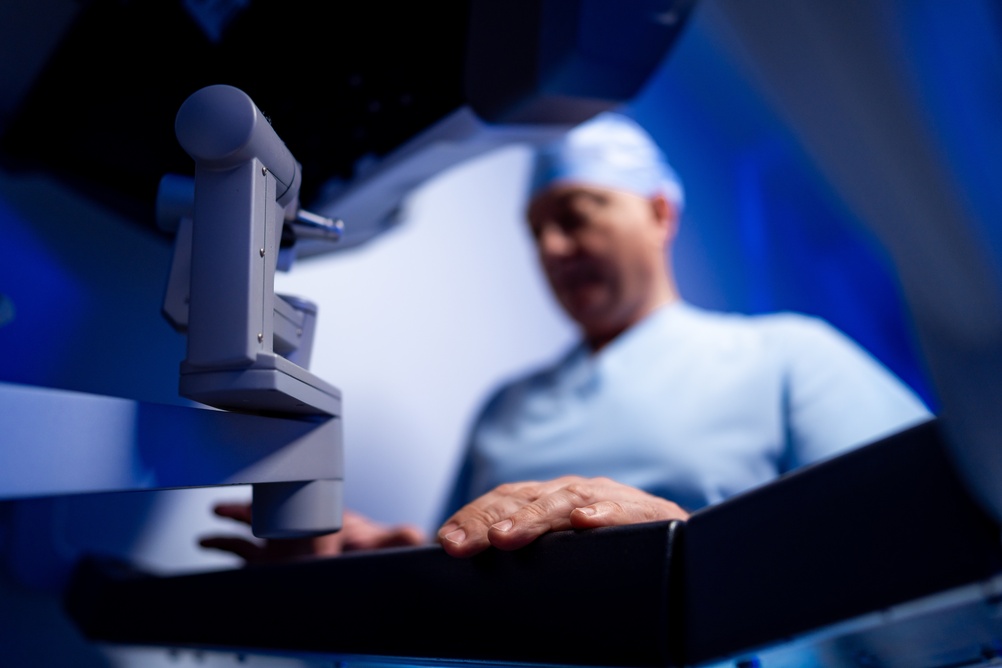
Hernia surgery has advanced significantly over the past few decades. Open surgery was long the standard for hernia repair, requiring large incisions and long recoveries. Laparoscopic techniques changed that, making minimally invasive hernia repair surgery possible. In 2026, technology is even more advanced. Robotic hernia surgery gives surgeons greater precision and control, and patients benefit too, usually going home the same day as surgery with minimal pain and a short recovery.
In this article, the experts at The Surgical Clinic explain what current research shows about the benefits, recovery, and long-term outcomes of robotic hernia repair, who may be candidates, and where to find a qualified hernia surgeon in Tennessee.
What Is Robotic Hernia Repair?
Robotic hernia repair is a procedure where a board-certified robotic surgeon repairs a hernia through several small incisions using robotic-assisted technology and a high-definition 3D camera system controlled from a surgical console. The robot does not perform surgery independently. Every movement is directed by the surgeon in real time.
Like laparoscopic hernia surgery, robotic hernia repair is minimally invasive. However, robotic-assisted technology provides surgeons with enhanced visualization, greater instrument flexibility, and built-in tremor filtration, improving control and precision.
Unlike traditional open hernia surgery, which requires a larger abdominal incision, robotic surgery is performed through small incisions and typically causes less disruption to surrounding tissue.
Robotic repair can be performed for most hernia types, including inguinal, ventral, umbilical, incisional, hiatal, and recurrent hernias, offering a minimally invasive repair option for hernias that once required open surgery.
Benefits of Robotic Hernia Repair Surgery
Robotic hernia repair offers several benefits, ranging from the precision of the repair itself to the speed and comfort of patient recovery, including lower complication rates, less postoperative pain, and strong long-term outcomes for appropriate candidates.
Less Pain and Reduced Need for Prescription Pain Medications
Pain levels vary with the type of hernia repaired, mesh placement, surgical complexity, and individual pain tolerance, but minimally invasive robotic hernia surgery is generally associated with less postoperative pain than traditional open surgery due to smaller incisions and reduced disruption of surrounding tissue.
In fact, research suggests patients undergoing robotic hernia repair may require fewer prescription pain medications during recovery, with some studies finding robotic hernia patients were more likely to avoid opioid pain medication entirely after surgery.
Faster Recovery
Robotic hernia repair is commonly performed as an outpatient procedure, meaning most patients go home the same day as surgery. Compared with traditional open surgery, minimally invasive robotic hernia repair is also generally associated with faster recovery times and an earlier return to normal activity.
It’s important to note that recovery timelines vary significantly. Exact recovery depends on the type of hernia repaired, surgical complexity, overall health, and whether the repair was straightforward, recurrent, or complex.
Low Complication Rates
Every surgery carries risks, including bleeding, infection, chronic pain, anesthesia complications, and hernia recurrence. However, robotic hernia repair is associated with lower 30-day complication rates than open surgery, including lower rates of surgical site infection, wound complications, blood loss, and mesh-related issues.
For patients with prior surgeries or significant scar tissue, the robotic approach also allows mesh placement away from the bowel and viscera, reducing the risk of injury that can accompany open techniques.
Small Incisions and Minimal Scarring
Robotic hernia surgery uses incisions roughly ¼ to ½ inch long, compared to the considerably larger incisions required in open repair. Smaller incisions mean less tissue disruption, reduced blood loss, a lower risk of surgical site infection, easier movement and comfort during early recovery, and minimal scarring.
Enhanced Visualization, Control, and Precision
Robotic surgical systems provide surgeons with enhanced visualization and instrument control, which may improve precision, especially during complex or recurrent hernia repairs, abdominal wall reconstruction, mesh placement, and procedures involving tight anatomical spaces where standard laparoscopic instruments may be more limited.
The high-definition 3D camera gives surgeons a highly detailed view of hernia anatomy, including nerves, blood vessels, and surrounding tissue, beyond what is visible with a standard laparoscopic 2D camera. Robotic instruments offer a greater range of motion and built-in tremor filtration, which may enable more precise movement around delicate anatomy during surgery.
What to Expect After Robotic Hernia Surgery
Most patients walk within hours of robotic surgery, go home the same day, and report feeling significantly better within a week. However, individual outcomes depend on hernia type, procedure complexity, and overall health, with some patients needing several weeks before returning to all normal activities.
Robotic Hernia Repair Recovery Timeline
Days 1 to 4
Many patients go home within hours after surgery and are encouraged to begin walking shortly afterward to encourage circulation.
You may be fatigued, notice swelling or bruising near the surgical area, and have soreness, tightness, and discomfort when standing, coughing, or changing positions. However, pain is typically described as mild.
Week 1
Most patients can gradually increase light activity. Many also return to work if they have a sedentary job, depending on the surgeon’s guidance and comfort level.
Weeks 2 to 3
Most patients notice improved mobility and less discomfort, and find that routine daily activities are much easier, though lifting restrictions often remain in place. Follow-up appointments are also typically scheduled during this window.
Weeks 4 to 6
Restrictions vary depending on the type of hernia repaired and the surgeon’s preference, but most patients are cleared to resume physically demanding work, more strenuous activity, and heavier lifting. For larger ventral or recurrent hernia repairs, recovery restrictions may last longer.
Results and Long-Term Outcomes of Robotic Hernia Repair
The goal of robotic hernia repair is to relieve symptoms, repair the weakened area, restore abdominal wall function, and reduce the risk of recurrence. Outcomes vary and depend on several factors, including:
- Hernia type and size
- Whether the hernia is recurrent
- Patient health and weight
- Smoking status
- Surgical technique
- Mesh placement
- Postoperative healing and activity restrictions
Research comparing robotic and laparoscopic hernia repair is still evolving, but shows that robotic hernia repair delivers results comparable to laparoscopic and open surgery when performed by an experienced surgeon, with potential advantages in recurrence and complication rates, and patient-reported quality of recovery.
- Recurrence Rates: While the differences are not clinically significant, a large-scale analysis by the American College of Surgeons found long-term recurrence rates of 13.4% for robotic repair, 12.3% for laparoscopic repair, and 12.7% for open repair. Recurrence depends heavily on hernia complexity, mesh selection, and surgeon experience.
- Complication Rates: Robotic repair consistently shows lower wound and surgical site complication rates than open surgery across multiple peer-reviewed studies.
- Patient Satisfaction: Some studies suggest patients undergoing minimally invasive robotic repair may experience improved early quality of life and satisfaction due to smaller incisions and faster recovery compared to open surgery.
Frequently Asked Questions About Robotic Hernia Repair
Is robotic hernia repair better than laparoscopic hernia repair?
Both robotic and laparoscopic hernia surgery are minimally invasive approaches with similar overall outcomes in many studies. The best approach depends on the type of hernia, anatomy, prior surgeries, and the surgeon’s experience.
Robotic repair offers advantages in visualization and precision, which is useful for certain recurrent, large, or complex hernias. For ventral hernias, another benefit is that many patients are discharged the same day, whereas laparoscopic repair may require an overnight stay.
Is robotic hernia surgery safe?
Robotic hernia repair is a well-established minimally invasive procedure with a strong safety record. When performed by an appropriately trained robotic surgeon, it generally results in fewer postoperative complications than open surgery. However, robotic surgery still carries risks, including bleeding, infection, chronic pain, anesthesia complications, and recurrence.
Who is a good candidate for robotic hernia repair?
Robotic repair is appropriate for a wide range of patients, including those with first-time inguinal, ventral, umbilical, or hiatal hernias; complex, large, or recurrent hernias that would otherwise require open surgery; and patients who want the fastest possible recovery with the least postoperative pain.
However, robotic surgery is not always the best option for every patient or hernia type. Prior surgeries, scar tissue, hernia characteristics, and overall health all factor into the decision. The best way to determine whether robotic hernia surgery is right for you is to undergo an evaluation with a board-certified robotic surgeon.
How long does robotic hernia repair surgery take?
Robotic hernia repair can take anywhere from 1 to 3 hours, depending on the type of hernia, whether mesh is used, surgical complexity, and if the repair is recurrent or involves abdominal wall reconstruction.
Robotic Hernia Repair at The Surgical Clinic in Middle Tennessee
If you have a hernia or believe you may have one, a consultation with an experienced hernia surgeon is the best way to understand if hernia surgery is necessary and, if so, whether you are a candidate for robotic repair.
If you choose The Surgical Clinic for hernia repair surgery in Middle Tennessee, you are in the best hands. Our hernia surgeons are highly skilled in complex repairs and are recognized regional leaders in robotic hernia surgery.
View our directory to schedule a consultation with a Surgical Clinic board-certified robotic surgeon near you at one of our locations in Middle Tennessee.
References
Surg Endosc (2017): Inguinal hernia repair: is there a benefit to using the robot?
Hernia / Intuitive registry (2018): New Study Shows Robotic-Assisted Surgery Benefits for Inguinal Hernia Repair
Journal of Abdominal Wall Surgery (2024): Robotic Assisted Hernia Repair in Four Nordic Countries
PMC11297094 (2024): Open vs. robot-assisted preperitoneal inguinal hernia repair
JAMA Network Open (2024): Learning Curves for Robotic-Assisted Ventral Hernia Repair
JAMA Surgery (2020): Patient-Reported Outcomes of Robotic vs Laparoscopic Ventral Hernia Repair
PubMed (2024): Surgical Approach and Long-Term Recurrence After Ventral Hernia Repair
Journal of Abdominal Wall Surgery (2025): Procedural Costs of Robot-Assisted and Laparoscopic Ventral Hernia Repair
PMC (TAPP outcomes series): Clinical outcomes from robotic transabdominal preperitoneal hernia repair
Intuitive (da Vinci): All About Robotic Hernia Repair | Da Vinci Surgery
General Surgery News (2023): Patients More Likely to Skip Opioids After Robotic Hernia Repair